Valuing Health and Safety in Kenya
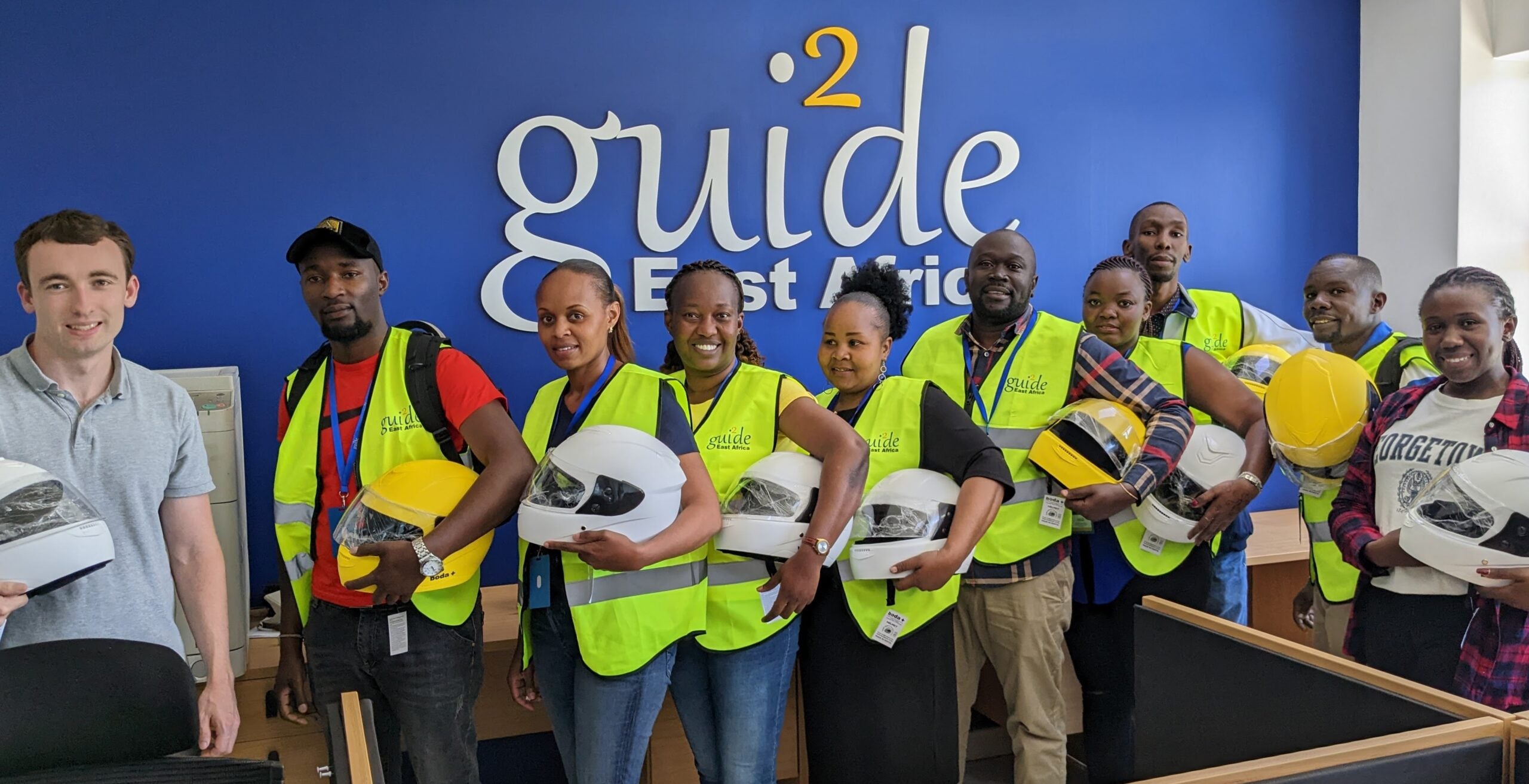
Group of people wearing hi-vis safety vests holding motorcycle helmets

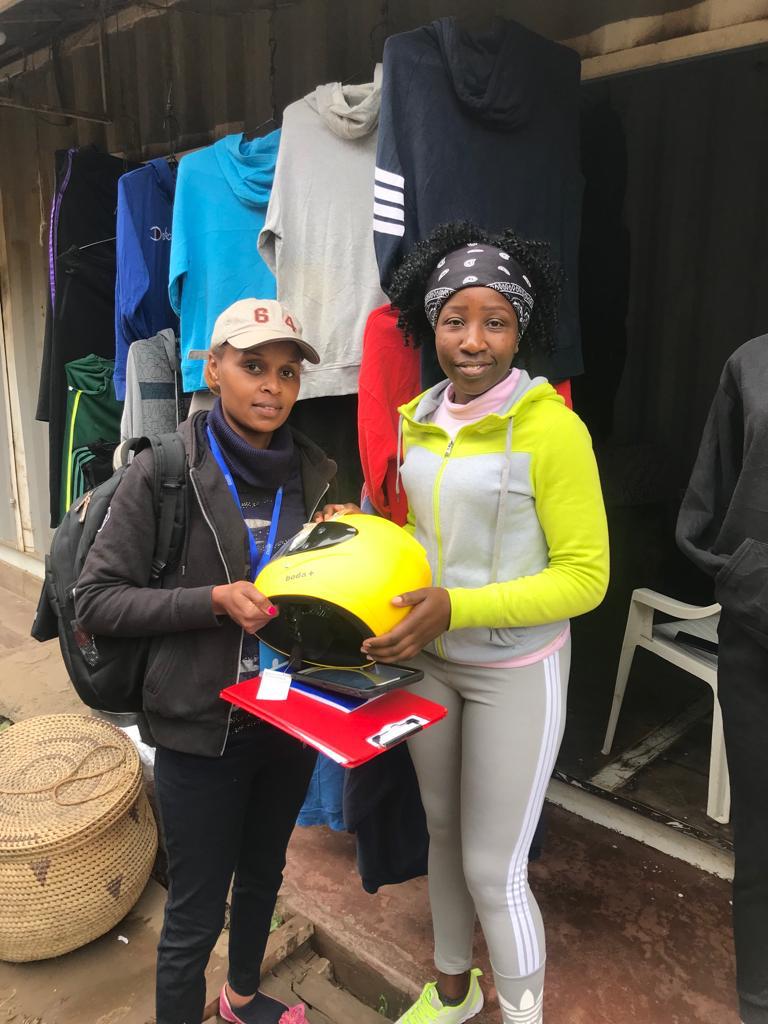
The Valuing Health and Safety in Kenya program houses two projects researching the use and sale of motorcycle helmets explore how individuals and firms in developing economies make decisions under risk, and what those decisions reveal about the true value of health and safety. Through field experiments in Nairobi, Kenya, we study the barriers that limit access to life-saving products and the economic trade-offs that shape how people weigh safety against cost, generating evidence that can guide more effective, preference-aligned policy and private sector investment.

Project Overview

Project Team

Project Information

Location:

Nairobi, Kenya

Timeline:

Nov ’22 – June ’26

Type of Project:

RCT

Sample Size:

1,536 consumers & over 2,000 firms


Background

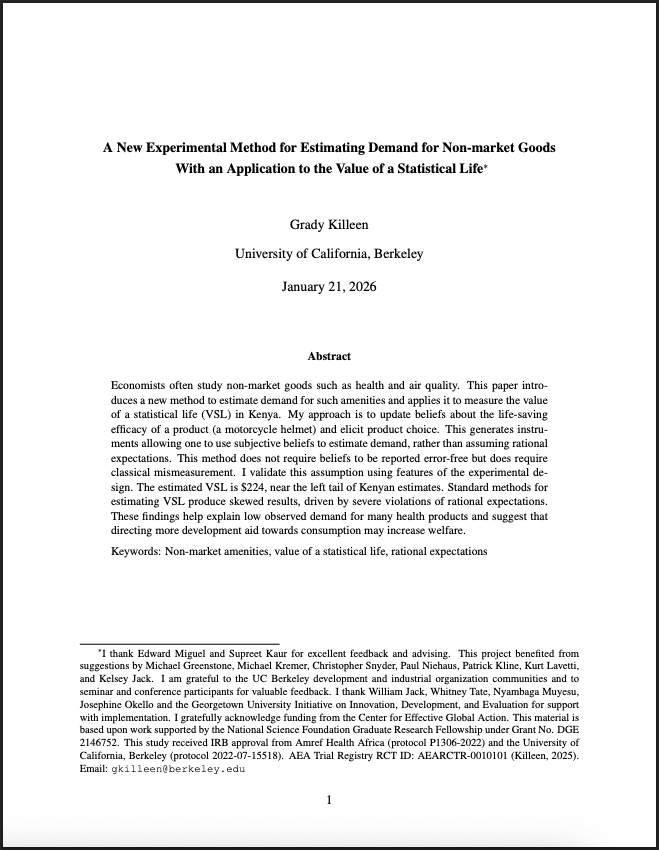
In partnership with the Center for Effective Global Action, gui2de is working to study the VSL of urban Kenyans using a novel experimental procedure. The approach debiases beliefs about the effectiveness of motorcycle helmets, and then examines the effect the change in beliefs has on demand to estimate how much consumers value safety. The project also allows us to study what factors affect demand for motorcycle helmets, which have low adoption in Kenya despite rapidly growing traffic deaths.

Study Context

The value of a statistical life (VSL), that is individuals’ willingness to pay for safety, is important to academic research and public policy. Academically, this parameter helps researchers understand optimal decisions in risky settings in fields such as healthcare and environmental economics. Policy makers use VSL estimates to balance safety and costs in a way that is best for consumers, based on their own preferences. But despite the importance of VSL, relatively little research has produced measurements of the statistic in developing contexts. The research that does exist focuses on the very poor (Kremer et al., 2011) or the very wealthy (Leon and Miguel, 2017) and makes strong assumptions about unbiased beliefs about the mortality risk of decisions.

Study Design

The study begins with detailed elicitation of beliefs about the risks of motorcycles and the perceived benefits of helmets. Two treatment arms are then exposed to different academic studies about the effectiveness of helmets, and then all participants participate in an incentivized game to measure their valuation for the helmet.

Results and Policy Lessons

Preliminary results show that a large majority of consumers in the control group value helmets above their cost. This striking result suggests that supply side issues may be limiting helmet use more than a lack of demand, and gui2de is pursuing follow-up research to test possible interventions. Despite high demand for helmets, estimates of VSL are low. This reflects the fact that consumers perceive extreme danger from motorcycles and they value helmets for reasons other than just reducing their chance of dying, such as injury prevention and style.

We caution that low VSL likely reflects the high value of money to consumers in our sample, not lower utility from life. This suggests that safety programs that place financial costs on Kenyan consumers (or come at the expense of financial gains) may not be welfare maximizing, but the results do not support the argument that aid programs that aim to improve safety would be more beneficial elsewhere.

Study Context

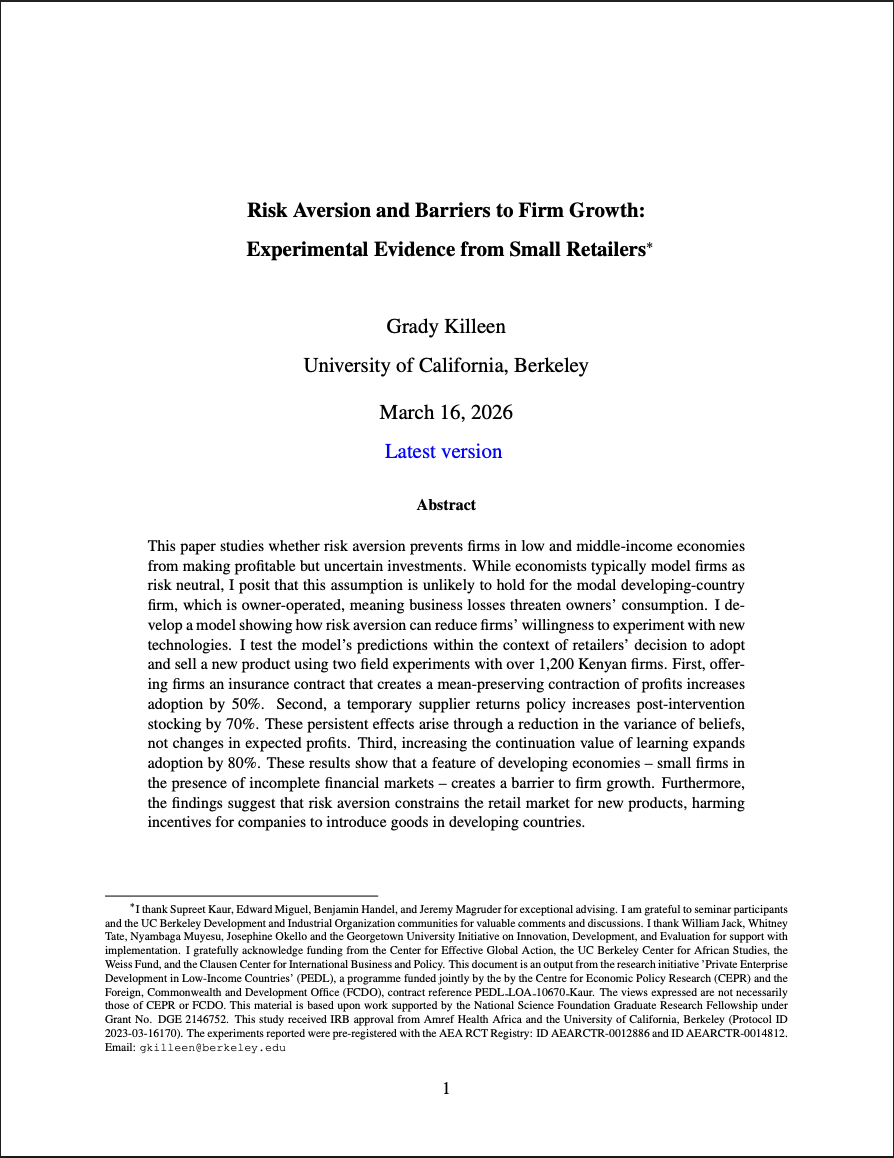
Economists have long debated why firms in developing countries are slow to adopt new products and technologies even when those products appear profitable. Existing explanations focus on capital constraints or information gaps. In this study, we test an under-explored explanation: that small, owner-operated firms are personally risk averse in ways that cause them to forgo profitable investments simply because the returns are uncertain. Unlike firms in high-income settings whose investors hold diversified portfolios, small retailers in developing countries have few financial buffers making risk avoidance a rational response. Where a bad month directly reduces household consumption, owner-operated firms are unlikely to take such risks.

Study Design

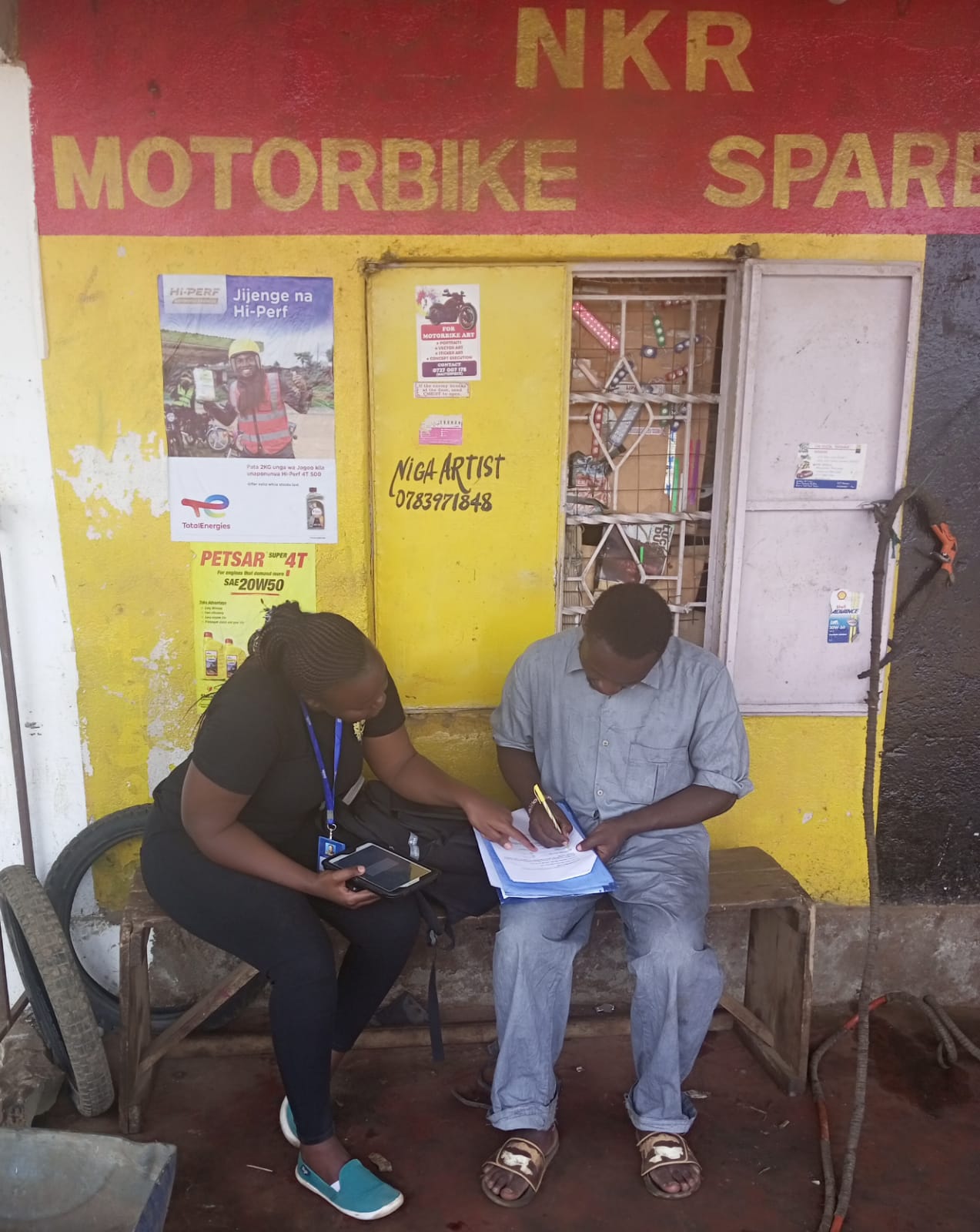
The study uses the Kenyan retail market for motorcycle helmets as a testing ground. Two field experiments were conducted: the first offered around 350 retailers in western Kenya the option to purchase helmets with or without an insurance contract designed to reduce downside risk. The second offered around 929 Nairobi retailers a temporary buyback policy before removing that protection to observe long-run behavior.

Results and Policy Lessons

Offering insurance increased helmet stocking by 50%, with the largest effects among the more established, profitable shops. This striking result rules out capital as the binding constraint and points squarely to risk aversion. In the second experiment, the buyback policy produced a 240% increase in stocking during the protected period. More strikingly, after the policy expired, shops that had participated remained 70% more likely to stock helmets than the control group, reporting roughly 10% higher profits and planning to expand stock. A single period of risk protection permanently shifted retailer behavior by allowing firms to learn that returns were reliably profitable.

The core policy implication is that standard business development programs, like those which focus on capital, training, or market information, may be insufficient if the true constraint is willingness to take risk. Temporary, modest risk-reduction interventions can unlock both investment and learning that persist long after the intervention ends. The findings also suggest broader consequences: if retailers systematically under-experiment with new products, this suppresses demand signals to manufacturers, discouraging product innovation for low-income markets across the supply chain.

Project Updates

Publications

Can Firm Risk Aversion Undermine Retail Markets in Developing Countries?

Grady Killeen explains that the most consequential takeaway from his working paper isn’t just for the retailers — it’s for the manufacturers.

June 3, 2026

Publications

When Risk Aversion Keeps Firms Small: Evidence from Kenyan Retailers

Grady Killeen explains his working paper, “Risk Aversion and Barriers to Firm Growth: Experimental Evidence from Small Retailers”, for The World Bank.

June 3, 2026