STARS Year 3 results inform scalable, evidence-based pay-for-performance contracts within government systems
The STARS team presented Year 3 findings at a national review workshop in Kigali in December 2025, with the Minister of Education and senior Ministry officials in attendance. Based on the findings from the past three years, the STARS approach will be implemented nationwide in the coming school year.
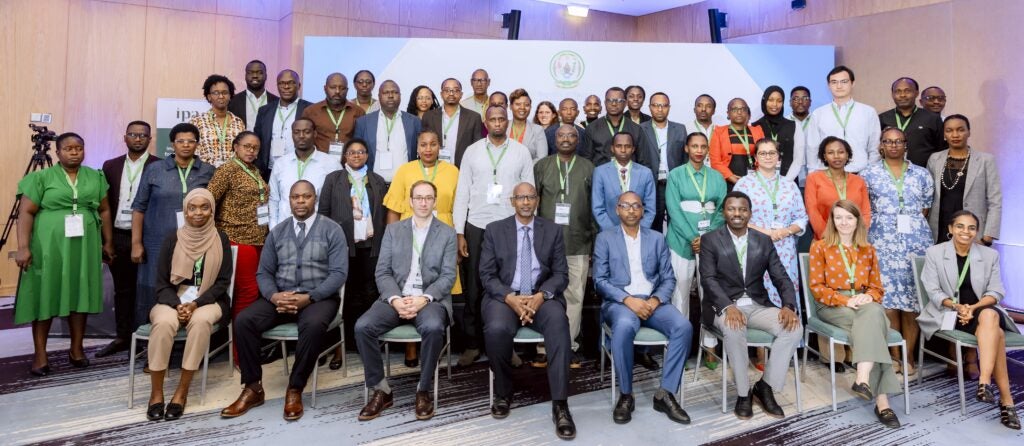
The Supporting Teacher Achievement in Rwandan Schools (STARS) program shared results from its third year of implementation during a national review workshop held in Kigali on December 9-10, 2025. The workshop brought together senior government leadership, including the Minister of Education, alongside officials from the Ministry of Education (MINEDUC), the National Examination and School Inspection Authority (NESA), and the Rwanda Basic Education Board (REB) to review evidence from Rwanda’s most advanced effort linking teacher incentives with classroom practice and student learning outcomes through government systems.
STARS is a multi-year collaboration between the Government of Rwanda, Innovations for Poverty Action (IPA), and Georgetown University’s Initiative on Innovation, Development and Evaluation (gui2de). The program works within Rwanda’s existing imihigo performance contract framework, where teachers receive bonuses based on their performance. STARS is working to adapt this framework by integrating measurable indicators of teacher presence, preparation, pedagogy, and participation into the national student information database, known as the Comprehensive Assessment Management Information System (CAMIS). Student scores from CAMIS are then used to calculate pupil learning gains, which have been added as a new component of teachers’ imihigo. Building on previous research by IPA and gui2de showing that pay-for-performance contracts can be successfully implemented in Rwanda, STARS embeds adaptive experimentation directly into Rwanda’s education system, allowing policymakers to test and refine contract design features under real implementation conditions.
Year 3 of the program focused on identifying which contract components and implementation modalities generate the strongest and most scalable results. Findings presented at the workshop showed that pay-for-performance contracts, when designed as a coherent package and delivered through existing administrative structures and supported by clear monitoring protocols, can improve teaching practices while remaining operationally feasible for national rollout.
Opening the workshop, the Minister of Education emphasized the importance of translating evidence into policy-ready recommendations. He noted that as Rwanda moves toward national implementation of student learning-based teacher imihigo, the priority is not only whether pay-for-performance incentives work, but how they can be delivered consistently and fairly across all schools.
Senior officials from NESA and MINEDUC highlighted the implementation challenges ahead, stressing that clarity, simplicity, and strong training systems are critical for ensuring that government officials, headteachers, and teachers understand how performance is measured and how scores translate into outcomes. Discussions emphasized the need for tools and guidance that teachers can realistically use, given the high-stakes nature of performance contracts linked to financial rewards and career progression.
Presenting the research findings, STARS Principal Investigator Andrew Zeitlin emphasized the value of adaptive experimentation in informing policy decisions. By testing multiple contract variations and implementation approaches over the past three years, the program has generated practical evidence on what works within government systems, rather than in isolated pilot settings. This approach has allowed Rwanda to move from proof of concept to policy-relevant design choices grounded in local context.
The workshop concluded with discussions on next steps, including final refinements to the imihigo contract design, monitoring processes, and training systems to support nationwide scale-up. Government counterparts reaffirmed their commitment to the STARS approach and, alongside the IPA and gui2de team, to implement the STARS pay-for-performance program nationwide in the coming school year.
- Tagged
- STARS